Costco Coconut Oil: Kirkland Organic Virgin, Price, Uses & Honest Review (Item 1045706)

By CostcoFan | Updated July 2026

Kirkland Signature Organic Virgin Coconut Oil, 84 fl oz · Item #1045706 · $16.99 in-store

I’ve been buying the Costco coconut oil for years, and it’s one of the few Kirkland products I genuinely never let run out. We cook with it, I’ve used it on my hair almost daily at times, and — the thing nobody else seems to mention — it’s the secret to the homemade peanut butter we make constantly. This is my honest, first-hand take: what it costs now versus a few years ago, every way we actually use it, the one real annoyance with the jar, and the story behind why the label quietly changed.

This article contains affiliate links. As an Amazon Associate, CostcoFan earns from qualifying purchases at no additional cost to you.


What It Is & What It Costs

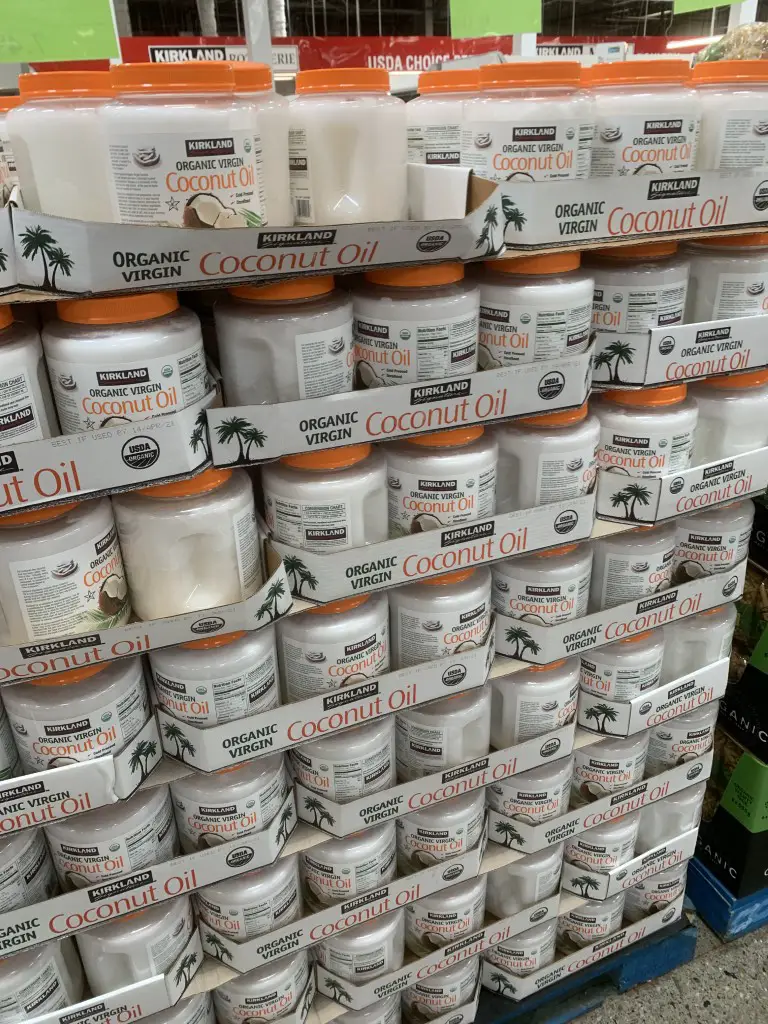
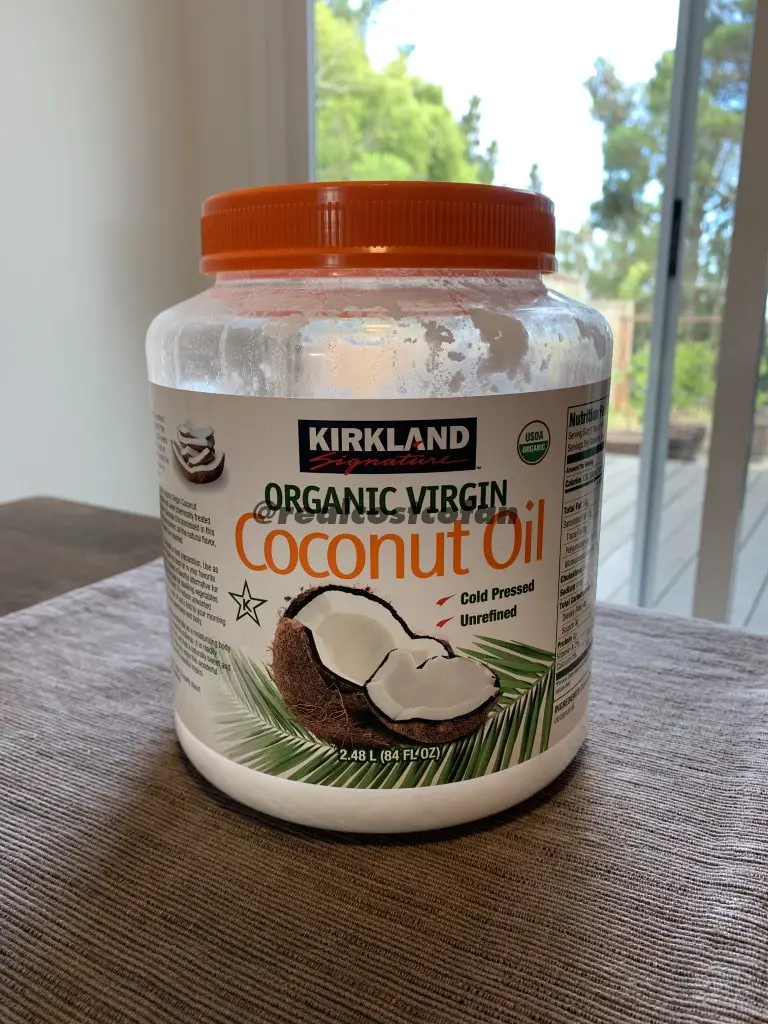
Costco’s coconut oil is Kirkland Signature Organic Virgin Coconut Oil, cold-pressed and unrefined, in an 84-ounce jar (item #1045706). “Virgin” and “unrefined” matter here: it means the oil keeps its natural coconut flavor and aroma, which is exactly why I like it for certain things (popcorn, peanut butter) and why you’d want to know before using it in a dish where you don’t want any coconut taste. More on that below.

Current price: $16.99 in-store. At 84 ounces, that works out to roughly $0.20 an ounce — which is the whole reason to buy it here. Comparable organic virgin coconut oil at a regular grocery store routinely runs two to three times that per ounce for a jar a quarter of the size.

A Quick Price History

I’ve tracked this one across the years, and it tells the usual Costco story:

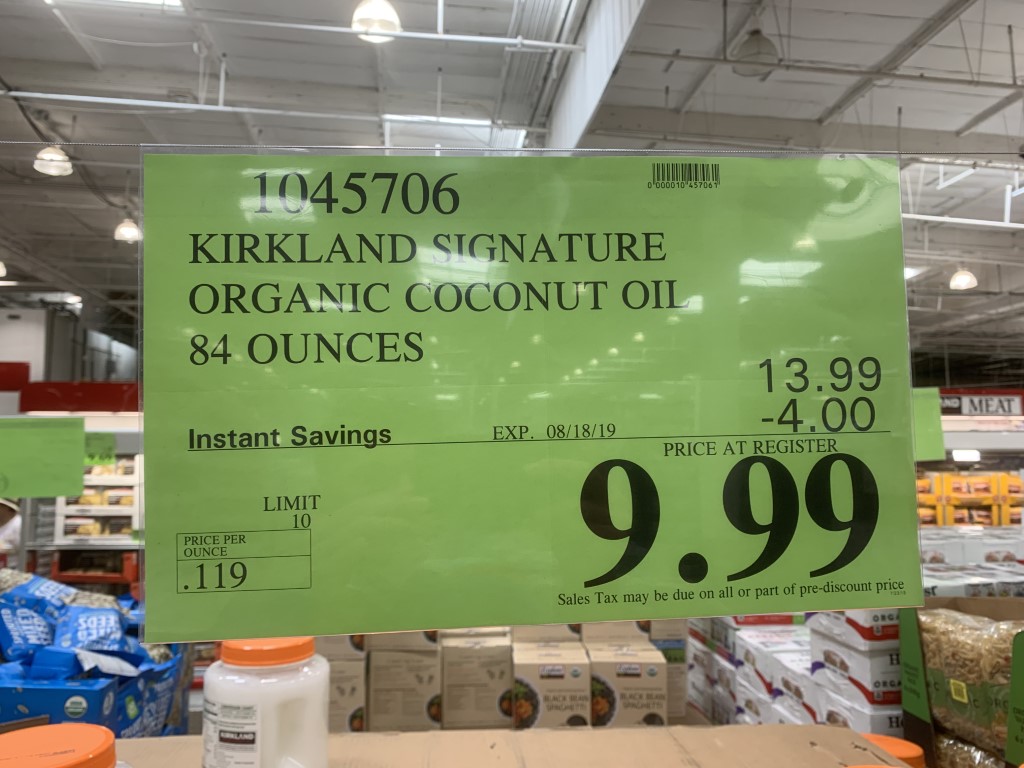
  • August 2019: $9.99 on sale (regularly $13.99)
  • July 2026: $16.99 in-store

So it’s climbed with everything else, but even at $16.99 the per-ounce value is hard to beat for an organic virgin oil this size. Worth grabbing when it dips on sale if you go through it like we do.


How We Actually Use It

This is where the coconut oil earns its spot in our cabinet. Here’s every way we genuinely use it, most-used first.

Homemade Peanut Butter (Our Favorite)

This is the one I tell everyone about. A tablespoon and a half of coconut oil is the difference between good homemade peanut butter and great homemade peanut butter — it gives it a subtle richness without ever tasting like coconut. Here’s exactly what we do:

  • ~6 cups dry-roasted unsalted peanuts
  • 1.5 tsp salt
  • 1.5 Tbsp Costco coconut oil
  • 1.5 Tbsp honey (optional)

Blend it until smooth. It makes about a 16 oz jar’s worth. Honestly, I think the peanut flavor comes through better without the honey, but it’s amazing either way — the honey version is a little more kid-friendly. The coconut oil does the real work: it smooths the texture and adds just enough depth that people always ask what’s in it. It’s never “coconut peanut butter” — the flavor is subtle. This alone is worth buying the jar for.

Homemade Popcorn

Same principle. I throw about a tablespoon in with the kernels, and it gives the popcorn a great, subtle coconut flavor. I don’t even add salt and I think it’s fantastic. If you make stovetop popcorn, try it once — it’s become the only way we do it.

Cooking

I reach for it whenever I want that coconut flavor and I’m not cooking at high heat. It’s excellent for lower- and medium-heat cooking, sautéing, and baking where a hint of coconut works with the dish. Because it’s unrefined, that flavor comes through — great for the right recipe, something to skip for the wrong one. A quick note on that below.

Hair

I’ve used it on my hair almost daily during certain stretches and genuinely loved it — my hair felt thick and healthy, it smelled great, and it kept my scalp from getting dry. One honest piece of advice: don’t sleep with it in. It’s oil, so it’s greasy — I’d put it in before a shower and wash it out, not leave it in overnight. Used that way, it worked great for me. (I’ll leave the deeper hair-and-skin claims to other people — I can only tell you it worked well for me and my hair liked it.)


The One Real Annoyance: The Jar

I have to be honest about the jar, because it’s the single most common complaint in the reviews and it’s legitimate. The container shape is awkward: even early on — after you’ve only used maybe 10% — it gets tricky to get a clean scoop without the oil smearing on the side of your hand, and it’s genuinely hard to fit a measuring spoon into the opening cleanly. It’s not just a last-bit-of-the-jar problem; it starts near the top.

For how we use it, it honestly doesn’t bother me — I’m scooping a rough tablespoon into a blender or a popcorn pot, not carefully leveling measuring spoons. But if you’re someone who needs precise measurements or hates a messy hand, fair warning: the jar is the weak point of this product, not the oil.


Storage: Does Costco Coconut Oil Go Bad?

Short answer: it’s remarkably shelf-stable. We’ve kept ours in the cabinet for up to a year and never had a single issue. Coconut oil naturally melts and re-solidifies with temperature — ours goes liquid when the house gets hot (we don’t have AC) and firms back up when it cools, sometimes multiple times, with no effect on quality. So if yours arrives liquid or you find it rock-hard, that’s completely normal, not a defect.

One tip that comes up repeatedly from reviewers and is worth following: don’t dip a wet utensil into the jar. Introducing water is the one thing that can cause mold to grow inside. Use a dry spoon and it’ll keep for a very long time.


Refined vs. Unrefined: Which Is This?

This trips people up, so it’s worth being clear. Costco’s Kirkland coconut oil is unrefined (virgin) — it retains a natural coconut flavor and aroma. That’s a feature for popcorn, peanut butter, and coconut-friendly baking, and a drawback if you want a totally neutral oil for high-heat or savory cooking where coconut would clash. If you specifically need refined coconut oil (neutral flavor, higher smoke point), Costco doesn’t reliably carry it, and you’d be better off with a refined option elsewhere. For most people wanting an all-purpose organic oil with that classic coconut character, the unrefined Kirkland is exactly right.


Why the Label Changed: The Coconut Oil Lawsuit

Here’s a bit of history most Costco coconut oil articles skip. Back in 2016, a class-action lawsuit alleged that Costco had misleadingly marketed its Kirkland coconut oil as “healthy and delicious,” when coconut oil is high in saturated fat. Costco reached a $775,000 settlement in 2017, and as part of it, agreed to remove the words “healthy” and “healthful” from the product’s label.

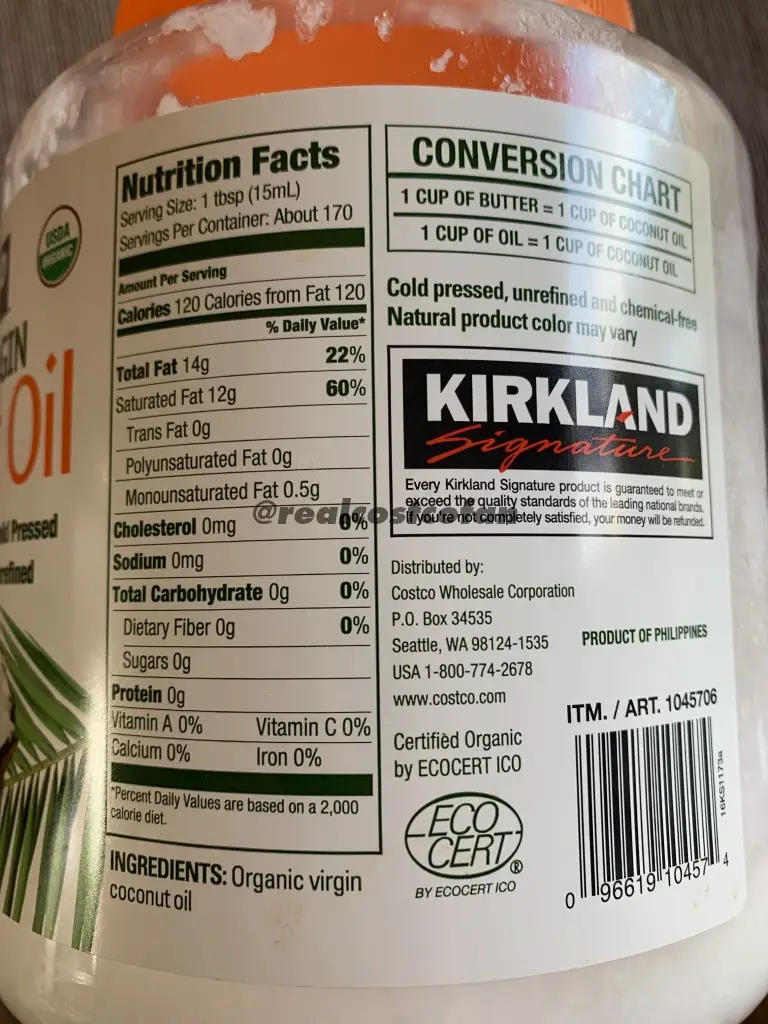
I’m not here to tell you coconut oil is or isn’t good for you — that’s between you, your doctor, and the nutrition label (which is why the nutrition-facts photo is right there above; look at the saturated fat and decide for yourself). For the record, the American Heart Association has advised against coconut oil due to its saturated fat content. I buy it and use it for flavor, cooking, and value — the peanut butter, the popcorn, the price per ounce — not as a health food. That’s the honest framing, and it’s worth knowing the label history so you understand why it reads the way it does now.


Where to Buy (Besides Costco)

The Kirkland version is Costco-exclusive, so if you’re not a member or want it shipped, here are comparable organic virgin coconut oils. They’re not the exact Kirkland product, but they’re the same style — organic, virgin, unrefined:

That said, if you have a membership, the Costco jar is the value play by a wide margin.


Frequently Asked Questions

How much is coconut oil at Costco?

The 84 oz Kirkland Signature Organic Virgin Coconut Oil (item #1045706) is $16.99 in-store — about $0.20 per ounce. It was $9.99 on sale (regularly $13.99) back in 2019, so it’s climbed, but it’s still excellent value for an organic virgin oil this size.

Is Costco coconut oil refined or unrefined?

It’s unrefined (virgin), so it keeps a natural coconut flavor. Great for popcorn, baking, and coconut-friendly dishes; not ideal if you want a completely neutral oil.

Does Costco coconut oil go bad?

It’s very shelf-stable — we’ve kept ours in the cabinet for up to a year with no issues. It melts and re-solidifies with temperature, which is normal. Just don’t introduce water (use a dry spoon) or it can grow mold.

Why did Costco remove “healthy” from the coconut oil label?

A 2016 class action alleged Costco misleadingly marketed the oil as healthy given its saturated fat content. Costco settled in 2017 for $775,000 and agreed to remove “healthy” and “healthful” from the label.

What size is Costco’s coconut oil?

The main jar is 84 fl oz, item #1045706.

What can you use Costco coconut oil for?

Cooking and baking (where coconut flavor works), homemade popcorn, homemade peanut butter, and personal care like hair. We use ours most for peanut butter and popcorn.


Follow CostcoFan for more finds:

Related Posts:

Leave a Comment

Leave a Comment

Start typing to search...